blank
blank

Compassion

Showing posts with label Did You Know. Show all posts

Tuesday, September 1, 2009

Did You Know? ~ Tots Love Juicing!!!


Last week, Jill shared a fabulous post with us all about the benefits of Green Juicing. I recently read her awesome book, Breaking Free ~ Truths for Healthy Living and was inspired to add daily vegetable juicing to our lives. What I didn't realize is the benefits it would have for my tot-Krash!


I began juicing for the health benefits, both for me and for my kiddos, but it has become SO much more. I am going to share the SO much more part with you (I'll leave the health stuff to Jill-she's really good at that part!!!!).

I include Krash (age 3) and my oldest son (age 7) in our daily juicing routine...yup, every day! It is more work to include them, but it is worth it. Here's what Krash is learning through this process:
  • Krash now knows the names of all of the vegetables we juice (which changes daily as I add new ones to our routine each week). We name each one as he puts it in the juicer.
  • We talk about colors as we put them in too, both as we put the veggies in and as the juice comes out! He loves to see the colors come out and name them!!!
  • He is learning to take turns-a valuable lesson for tots!!! I split the pile of veggies (and an apple) up for him and Pac Man and they have to take turns putting the items in the juicer. This is a great lesson for both of them!!!
  • He is learning cause and effect, as he sees the whole veggies go into the juicer and come out as juice!
  • He is now eating vegetables (well, drinking them!!!). I think involving him has made him much more interested in consuming what we make!!! Krash will drink the straight juice along with me, although Pac Man prefers me to mix it in a smoothie. K will drink it either way. He is even eating raw veggies better now, and I wonder if it is because we are juicing and he now is more involved with veggies in general?
I wrote a whole post about juicing with my kids here on my Lil' Ladybug blog if you'd like to read more and see what we are juicing, a bit more about our routine, and which juicer we have!!! I also plan to share more about our juicing endeavors over there as we go along!

Tuesday, August 25, 2009

Did You Know ~ Green Juicing


Believe it or not, vegetable juicing is one of the best keys to optimal health and yet most people have never tried it. People who have the healthiest digestive tracts know the importance of juicing and make it part of their daily routine. Some even swear by juicing most meals and eating raw whenever they feel the desire to chew. When you implement juicing into your life and make sure you are getting the required fats, water and healthy salts your body needs, nothing compares to the health you can achieve! Juicing is the easiest way to consume a large amount of raw food, gives the digestive tract a break, cleanses the colon, gives you more energy and an overall sense of well being very quickly! How many things that you do each day can do all of that?

Vegetable juicing works because it balances the acidity that most of us struggle with. We all need about one pound of vegetables for every 50 pounds of body weight to balance our pH, and juicing is the easiest way to manage that.

It's important to eat plenty of necessary fiber found in legumes, whole grains, and whole fruits and vegetables. Juicing releases the nutrients from the fiber of the juice, allowing you to drink vitamins and minerals that would not otherwise be absorbed by the body and leaves the fiber behind.


My husband sent me the list below the other day excited to see once again how healthy our morning ritual of drinking green juice is for us. We both love it and look forward to starting our day off with our green juice. Our friend Joel has been teaching and preparing raw foods for over 8 yrs now and works with Dr. Mehmet Oz in NYC. Joel and I held raw classes together for a few years. I have not read his new e-book yet, but I'm sure it is full of his delicious recipes and easy style of preparing super nutritious meals.

We all know that eating plenty of greens is necessary for optimum health. Eating fresh, organic, local greens is the best medicine we can give our bodies. A daily green juice is one of the best ways to ensure that we get plenty of greens. It makes it so easy, and even those people out there who don't love greens will enjoy a delicious green juice because the flavor can be masked. Green juice is a wonderful way to make sure children are getting all that they need daily for their ever growing bodies!


Here are 6 Reasons to Consume Green Juice Everyday:

  • Juicing helps in the absorption of nutrients – If your digestive system is less than optimal, it can be difficult to absorb all of the nutrients when eating greens. Juicing will break down the cell walls of vegetables so that they are pre-digested for you. This means that all of the nutrients go straight into your system.
  • Juicing means that you can eat more greens – you probably aren't going to eat a whole head of celery in a day…but you can easily drink a whole head of celery juice. Juicing also allows you to consume a wide variety of greens all at once. You most likely wouldn't have kale, cucumber, celery and parsley for breakfast, but you will enjoy it as a juice.
  • Juicing is a great way to get loads of chlorophyll, which is the building block of our bodies. Chlorophyll is what makes plants green, and it is perhaps the most powerful element that exists in the universe. It is medicine for our bodies. It increases the flow of oxygen to all parts of the body, which means we release more carbon dioxide, toxins and stress. Plenty of oxygen means that our bodies become an aerobic environment where disease cannot live. An anaerobic environment is where disease thrives.
  • Green vegetables contain nearly all of the trace minerals we need – Most people are seriously lacking in essential minerals which mean that our bodies are not equipped with the necessary resources to fight disease and feel fantastic. Green juice is a great way to get all of the vital minerals for vibrant health.
  • Green juice provides us with the enzymes that we need to cleanse, detoxify and renew at a cellular level. Enzymes are also needed to digest food. We cannot have amazing health without enzymes. Cooking and processing of any type destroys all enzymes, so raw food, especially greens, is absolutely essential to maintain healthy enzyme levels. A daily green juice is a sure way to maintain enzyme levels.
  • Juicing makes greens taste great – As mentioned above, juicing can make greens more palatable. This is because they can be sweetened with an apple or carrot. It is essential not to overdo it on apples and carrots because they can raise blood sugar levels, but adding a carrot or apple to a green juice transforms it into a delicious juice that most people will enjoy.
Sheryl Walters

Delicious Green Juice Recipe: (organic veggies only)

2 Sticks of Celery
Handful of Spinach
½ a Cucumber
1 bunch Parsley
1 carrot

When you are introducing small children to juicing, it is best to keep it simple and use only a few ingredients. Children like bland juices with a touch of sweetness. Please don’t make the excuse that they need sweet juices or they won’t drink them. You are truly kidding yourself and cheating your children if you believe this to be true. Here are some tips to making delicious juices for them. Remember do not use spinach until they are about one-and-a-half years old. Children tend to become allergic to the oleic acid in spinach if introduced too early.

Use any of the following two ingredients: cucumbers, celery, parsley, romaine lettuce, apple, kale, and then after it is made, add some coconut juice (water) for extra potassium and many other health benefits from the coconut juice. You will soon realize that juicing for one person does NOT require a lot of vegetables until you are consuming more than 4 ounces of juice at a time and juicing several times throughout the day. Once you work up to this level of juicing it would be a good idea to join a local farm group or CSA (Community Supported Agriculture). If you already belong to one of these then now you know another great way to not waste what you get each week. You can simply juice them.


To make juice go a lot further and to increase the availability and ease of digestion mix half water and half juice, especially for children. Begin them on 1-2 ounces of juice per day and then work up to as many ounces as they ask for. Go for small successes and not struggles when introducing anything new to your family, especially children. Even if they drink only one ounce, that is great. Try to increase it an ounce a day until you reach 6 ounces daily. Nothing is healthier than fresh-made vegetable juice. Follow the same rule for yourself. Start off with three ounces and then slowly increase the amount of juice you are making. This means you are drinking six ounces when mixed with the purified water. For those of you who only drink your juice straight, there is much debate over whether you gain more benefits from diluting it with water or just drinking it straight.


To learn more about juicing and truths about health that will guide you to living the best way you can for you and your family - visit
Another great recipe and way to get in your daily greens - by Joel.

Kale Salad

  • 1 head kale
  • 1 red pepper diced
  • 2 TB Hemp seeds
  • 2 TB extra virgin olive oil
  • 2 TB lemon juice
  • Pinch of sea salt
  • 1 tsp your favorite herb mix

Chop kale into bite size pieces add remaining ingredients. Then the secret to making this salad really tasty is to massage the kale mix for 3-5 min. Enjoy!

Tuesday, August 4, 2009

Did You Know ~ Sugar


Did you know that over indulging in sugar can cause many health problems, both in the short term and the long term?


The most common cause for disease outside of over consumption of animal protein and dead food is SUGAR!!! Eating excess amounts of sugar in all forms causes tooth decay and all kinds of physical, mental and emotional problems. The average American consumes 50 teaspoons of sugar per day. Eating refined sugar weakens your immune system and promotes yeast overgrowth. Candida shows up in many ways in our body, from skin conditions (eczema, dry skin, white spots that don’t tan, rough dry skin on elbows and feet), to the onset of diabetes as well as in promoting the growth of cancer cells in your body. Cancer cells thrive on sugar.

Did you know that all non-diet sodas have a minimum of 10 teaspoons of sugar in each can? That amount of sugar can immobilize the immune system by 30% for an entire day! A 12 ounce soda at a fast food chain has 18 teaspoons of sugar. I often put 18 teaspoons on a tray and show it to parents and their kids and ask, “Would you let your children sit down and eat that many teaspoons of sugar?” Most people find it hard to believe until they see it in front of them. Of course the answer is no! We would not let them eat that many teaspoons of sugar, yet we are doing it every day.

I see children as young as one year old, maybe younger being given soda from their parents at theme parks, at restaurants, and everywhere we go, and it makes me cry inside for that child. These very same parents are upset at their children for being too hyper or unable to concentrate. These are the same parents that wonder why their children develop diabetes, are overweight and have poor dental health at such a young age. The next time you go to a toddler or a first birthday party, watch how many kids are walking around with lollipops and candy all before they even eat lunch, which most likely is hot dogs or pizza.

In Chapter Six (Breaking Free - Truths for Healthy Living) I discuss how to feed our children. I touch on a subject very near and dear to me – teaching our youth how to be healthy and make healthy choices for themselves starting as young as you can. Kids don’t need sugar treats to be happy! None of us do! We can’t find happiness in food no matter how much we eat. The void inside of us can only be filled up when we deal with the root issues. This, too, will be discussed in length in Chapter Four. Yes, I was a kid and I survived after eating lemon heads and gobstoppers to no end. I survived; however, those “treats” were all part of what caused my digestive issues and health challenges. If you lead by example your kids will follow right along. Instead of store-bought cookies, we eat vegan cookies made with all organic ingredients and agave. There are many vegan recipes for delicious baked goods, and when you eat them yourself, you CANNOT taste the difference.

Most packaged cereals have sugar as their major ingredient. Avoid most natural sweeteners (including corn syrup, fructose, honey, sucrose, maltodextrin, dextrose, molasses, sweetened flavored milks, store bought fruit juice, brown rice syrup, maple syrup, date sugar, cane sugar, corn sugar, beet sugar, succanat and lactose). Raw honey in tiny amounts can actually be beneficial to the digestive tract and has many other health benefits. However, if you are dealing with any health challenges, it is best to avoid all sugars until symptoms go away. Yes, this means natural sugars from fruits as well.

When in doubt about the sugar content of a food you can always look at the list of ingredients and see how many grams of carbohydrates are listed. Unless the carbohydrates are from above-ground vegetables, you should be concerned that they represent sugars that could alter your insulin levels. A good rule of thumb is if there are more then 5 grams per serving, it is too much sugar. When you give your children fruit juice or almond/rice milk, water them down so they are not getting as much sugar throughout the day. Never give kids soda, coffee or store bought ice tea! Never give them anything that is diet!

The carbohydrate craze has told us to avoid carbs like the plague. While eating a variety of complex carbohydrates (carbs) is necessary for good health, eating refined (simple) carbohydrates is the cause for the bad association. Eating the simple carbs can place a drain on your energy, induce sleepiness when you want to be awake, and cause weight gain when you want to be slim.

It is NOT ironic that the carbs we like best are breads, potatoes, pastas, cookies, soft drinks and angel food cake. These all drive our blood sugar sky-high, a real problem as we age. More disturbing is that people still consume way too much white flour products. They are completely void of any nutritional value and have nothing to offer but health challenges. Simple carbs run you down and tire you out if their glycemic index (GI) is too high (range is 0-100). The GI is a measure of how much a carb affects our blood sugar levels, determining how fast they rise, how high they get and how long they stay there. A GI of 70 or more is high, and consumption of large amounts of these foods is associated with low nutritional intake, morbidity and early death. A GI of 56 to 69 is considered medium and these foods usually are nutritious. A GI of 55 or less is low, and these foods are often highly nutritious and associated with longevity. Bananas and oranges are high, whereas, apples, legumes and green vegetables are low.

What's worse is that high blood sugar can stimulate the formation of molecules called AGEs (advanced glycation end products), which are known to be reflective of how fast we age. Carbohydrates that are low on the glycemic index meaning they break down slowly and their glucose is gradually released into the bloodstream are fine. The theory is that if your blood sugar rises too quickly, inflammatory chemicals that contribute to the aging process will be released. Highly wrinkled skin is from dehydration and a diet rich in high GI foods. The more insulin we need to produce, the quicker we age.

One reason many people suffer from hypoglycemia is that grains and sugars cause us to have large amounts of insulin circulating in our blood, which heavily weight their diets. When you stop eating grains, your body will take several days to lower your insulin levels. In the meantime the high insulin levels will cause you to have many symptoms such as dizziness, confusion, headaches, and a generally miserable feeling.

If you eat every two hours for the first few days of your transition you will be able to avoid this temporary side effect. You will need to eat some protein, such as a piece of fish or some seeds along with a vegetable such as a piece of celery, cucumber or red pepper. This will help to prevent hypoglycemia and stabilize your blood sugar. Even after your system has adjusted, it will be wise to eat 4-6 meals a day. Eating more frequently has been shown to normalize cholesterol levels. It will also help your adrenal glands better regulate cortisol levels.

Some important facts about sugar consumption:

  1. Today’s Consumption: Today, an average American consumes 2-3 pounds of sugar each week. While at the end of the 19th century (1887-1890), the average American consumed only 5 lbs. per year.
  2. A Continual Rise: Over the last 20 years, sugar consumption in the U.S. has increased from 26 pounds to 135 lbs. of sugar per person per year.
  3. Hidden Culprits: Sugar consumption includes highly refined sugars that are incorporated into many of the foods we eat (bread, peanut butter, condiments, sauces, etc.). Some of these are better known as sucrose (table sugar), dextrose (corn sugar), and high-fructose corn syrup.
  4. 4 Classes: 4 classes of simple sugars (Sucrose, fructose, honey, and malts) are deemed “harmful” to optimal health when long-term consumption is over 15% of carbohydrate calories ingested. Hint…complex carbohydrates (veggies, beans, legumes, whole grains) are the way to keep this number below 15%.
  5. Health Issues: Simple sugars have been documented to contribute to and/or aggravate health problems, including: asthma, mood disorders, mental illness, nervous disorders, diabetes, heart disease, gallstones, hypertension, and arthritis.
  6. Insulin Impacts: Sugar raises insulin levels, inhibiting the release of growth hormones which depresses the immune system. Further, too much insulin promotes the storage of fat, so that when you eat foods that are high in sugar, you’re enabling rapid weight gain and elevated triglyceride levels, both of which have been linked to cardiovascular disease.
  7. Degenerative Disease: Sugar has no real nutritional value (minerals, vitamins and fiber) and as a result, has a deteriorating effect on the endocrine system, causing sugar consumption to be one of the 3 major causes of degenerative disease.
  8. Cancer Culprits: Turns out that cancer’s preferred fuel is none other than glucose. Controlling one’s blood-glucose levels through diet, exercise, supplements, meditation and prescription drugs – when necessary – can be extremely important to a cancer treatment program.
Test your sugar knowledge here.

To understand sugar's effect on your health - go here!


Hyperglycemia or high blood sugar occurs when levels of sugar in the blood go above range. The correct range for a normal person is to have blood sugar levels between 80-120 mg/dl. Doctors tend to try and keep their diabetic patients under 160 mg/dl. When blood sugar levels go above these ranges the result is hyperglycemia.

What is the cause for high blood sugar? Hyperglycemia can be attributed to various reasons.

* Too many carbohydrates or sugar in a meal. (ex. Pizza or spaghetti contain high amounts of carbohydrates) Carbohydrates turn into sugar after consumption.

There are warning signs for high blood sugar. The diagram below shows some of the common side effects that occur when experiencing hyperglycemia.


Here is a list of ways sugar can affect your health:

* Sugar can suppress the immune system.
* Sugar can upset the body's mineral balance.
* Sugar can contribute to hyperactivity, anxiety, depression, concentration difficulties, and crankiness in children.
* Sugar can produce a significant rise in triglycerides.
* Sugar can cause drowsiness and decreased activity in children.
* Sugar can reduce helpful high density cholesterol (HDLs).
* Sugar can promote an elevation of harmful cholesterol (LDLs).
* Sugar can cause hypoglycemia.
* Sugar contributes to a weakened defense against bacterial infection.
* Sugar can cause kidney damage.
* Sugar can increase the risk of coronary heart disease.
* Sugar may lead to chromium deficiency.
* Sugar can cause copper deficiency.
* Sugar interferes with absorption of calcium and magnesium.
* Sugar can increase fasting levels of blood glucose.
* Sugar can promote tooth decay.
* Sugar can produce an acidic stomach.
* Sugar can raise adrenaline levels in children.
* Sugar can lead to periodontal disease.
* Sugar can speed the aging process, causing wrinkles and grey hair.
* Sugar can increase total cholesterol.
* Sugar can contribute to weight gain and obesity.
* High intake of sugar increases the risk of Crohn's disease and ulcerative colitis.
* Sugar can contribute to diabetes.
* Sugar can contribute to osteoporosis.
* Sugar can cause a decrease in insulin sensitivity.
* Sugar leads to decreased glucose tolerance.
* Sugar can cause cardiovascular disease.
* Sugar can increase systolic blood pressure.
* Sugar causes food allergies.
* Sugar can cause free radical formation in the bloodstream.
* Sugar can cause toxemia during pregnancy.
* Sugar can contribute to eczema in children.
* Sugar can overstress the pancreas, causing damage.
* Sugar can cause atherosclerosis.
* Sugar can compromise the lining of the capillaries.
* Sugar can cause liver cells to divide, increasing the size of the liver.
* Sugar can increase the amount of fat in the liver.
* Sugar can increase kidney size and produce pathological changes in the kidney.
* Sugar can cause depression.
* Sugar can increase the body's fluid retention.
* Sugar can cause hormonal imbalance.
* Sugar can cause hypertension.
* Sugar can cause headaches, including migraines.
* Sugar can cause an increase in delta, alpha and theta brain waves, which can alter the mind's ability to think clearly.
* Sugar can increase blood platelet adhesiveness which increases risk of blood clots and strokes.
* Sugar can increase insulin responses in those consuming high-sugar diets compared to low sugar diets.
* Sugar increases bacterial fermentation in the colon.

Things you can do to lower your risk of sugar related illness and diseases:

Keep added sugar to no more than 10% of total calories. If you're a 45-year-old woman of average height (5-foot-4), that's 160 calories (or 10 teaspoons)from added sugar—about the number in one 12-ounce can of Coca-Cola or six Hershey's Kisses. By comparison, the average American consumes 31 teaspoons per day of added sugar, or the equivalent of 465 calories.

Watch for hidden sugar in food. Many prepared foods contain hefty amounts of sugar—but it's hidden under aliases—including barley malt, corn syrup, dextrose, fruit juice concentrate, maltose, maple syrup, molasses, and turbinado—on ingredient panels. The key is determining how many teaspoons of sugar each serving contains. Doing this is easy: Check the nutrition label for sugars, which are listed in grams under total carbohydrates, and then divide that number by 4 (each teaspoon of sugar is equal to 4 g) to convert it to teaspoons. For example, if sugars are listed as 12 g, you're getting 3 teaspoons of sugar per serving.

Avoid high fructose corn syrup. This type of sweetener, which is made by changing the sugar in cornstarch to fructose (another form of sugar), is believed to produce more AGEs than other types. Because HFCS extends the shelf life of foods and is sweeter and cheaper than other sugars, it's a popular ingredient in soda, fruit- flavored drinks, and packaged foods such as breads, crackers, and other snacks. You can spot it in ingredient lists on nutrition labels.

Employ an inside-outside approach to antioxidants. These free-radical fighters help keep sugar from attaching to proteins, so replenishing their supply—both by eating more antioxidant-rich fruits, nuts, and vegetables, such as cranberries, walnuts, and red bell peppers.

~written by Jill, author of Breaking Free - Truths for Healthy Living. To learn more about healthy living visit www.breakingfreetruths.blogspot.com

Wednesday, July 8, 2009

Did You Know ~ Breaking Free!


Therefore, I urge you, brothers, in view of God's mercy, to offer your bodies as living sacrifices, holy and pleasing to God—this is your spiritual act of worship. 2 Do not conform any longer to the pattern of this world, but be transformed by the renewing of your mind. Then you will be able to test and approve what God's will is—
His good, pleasing and perfect will.
Romans 12:1-2


We are going to change things up a bit and talk directly to you Mom's and Dad's out there reading our blog.

Why? Because we care about you too! We know that the way to raise happy and healthy children, is by helping to teach you how to stay healthy too!

I (Jill) want to teach you all about the importance of learning all you can about the health of your digestive tract and keeping your body alkaline.

You will learn about the healing power of water, salt, wheatgrass, psyllium husks and why we need to clean out years of toxins trapped inside of our bodies!

How do you know if it is time to clean the inside of your body?

It is time to free your body from accumulated toxins, parasites and other waste materials if you experience one or more of the following:


  • Frequent fatigue and low energy

  • Flatulence, gas & bloating
  • Excess weight

  • Food sensitivities and allergies

  • Impaired digestion

  • Irritability, mood swings

  • Trouble sleeping

  • Bad breath & foul-smelling stools
  • Parasites in stool

  • Frequent colds and illness Recurring headaches

  • Chronic constipation

  • Irritable Bowel Syndrome (IBS)

  • Protruding belly pooch

  • Powerful food cravings

  • Skin problems, rashes, etc.

  • Metallic taste in mouth
  • Hemorrhoids
  • Yeast Infections

After meeting 100's of people at my seminars and health talks I saw one common thing over and over again - our country would be much healthier if we all cared about the appearance of our digestive tract as much as we do our exterior. I have joked that it would have been really amazing if God made it possible for people to look inside their bodies and see for themselves the damage they are doing day in and day out by the food choices they make and the lack of water they drink daily.


If we spent half as much time looking at what we eat like as do in a mirror each day our country would not be one of the top three obese countries with the most health challenges. How we look and feel all depends on the health of our digestive tract. Over the next week or so I will begin discussing the importance of cleansing, why and when to cleanse, as well as, how to do a cleanse safely.


I am praying on when to begin a community cleanse. If you are interested in joining and feel you are ready to surrender your health to the LORD and watch Him cleanse you from the inside out - please email me or leave a comment here.

Sign up to follow my book blog, because you won't want to miss out on learning each step necessary to Breaking Free and enjoying a healthy life! Invite your friends to follow along too, so that you will have others to encourage you along this amazing journey!

“The secret to great health can be described in these words: Cleanse the Inside of Your Body and Your Mind!"

Wednesday, June 17, 2009

Did You Know ~ Sun Safety- Part 2

Sun Safety

Find part 1 here


Concerns associated with typical sunscreens:

  • Some sunscreen chemicals are readily absorbed through the skin and can enter the bloodstream. Once commonly used UV filters are absorbed into the skin and bloodstream, it can generate harmful components called reactive oxygen species, which are substances that can cause skin cancer. Thus, sunscreen soaked into the skin can form the very dangerous compound it was meant to block. This may be a particular concern for young kids who have less well-developed processes of elimination and a larger surface area per body weight than adults.
  • Many sunscreen chemicals have strong estrogenic actions that can interfere with normal sexual development, cause reproductive problems, can increase cancers, and cause birth defects in children. Children's organs are more sensitive to estrogen exposure than adult's and can develop abnormalities at their early stages (including embryo, fetus, and toddler stages) if exposed.
  • The chemicals in sunscreens can cause skin irritation and rashes.
  • Common sunscreen ingredients are suspected or known carcinogens and/or hormone disrupters, including diethanolamine, triethanolamine (DEA, TEA), padimate-o, octyl dimethyl PABA, benzophenone, oxybenzone, homosalate, octyl-methoxycinnamate (octinoxate), salicylates, and parabens.
  • A popular sunscreen chemical, called Benzophenone (Benzophenone-3, Oxybenzone) is a powerful free radical generator activated by ultraviolet light. Studies suggest that these free radicals could initiate reactions that may ultimately lead to melanoma and other skin cancers, conditions that sunscreen is supposed to prevent. Moreover, Benzophenone has been linked to allergies, hormone disruption, and low birth weight in infant girls whose mothers used the chemical during pregnancy. According to the CDC
    97% of Americans are contaminated with this widely-used sunscreen ingredient.
  • Triethanolamine (TEA) is a commonly found ingredient in sunscreen. However, this chemical can combine with nitrite (used as a preservative and often not labeled on cosmetic products, or present as an environmental contaminant) to cause formation of cancer-causing nitrosamines.
  • Parabens (butyl-, ethyl-, methyl-, and propyl-)
    are very commonly used in sunscreens. They are preservatives that have estrogenic qualities, which have been found to produce decreased testosterone levels and other abnormalities in laboratory rodents. In addition, parabens have been found to accumulate in the breast tissue of women with breast cancer.
  • Padimate-O and Parsol 1789 (Avobenzone) can cause DNA damage when absorbed into the skin. Sunlight may cause these chemicals to become reactive and cause free-radical damage when absorbed.

Recommended Healthy and Safe Sunscreen

Given the concerning chemicals that is often found in sunscreen, it is important to seek out healthy sunscreen that adequately protects from the sun, but does not contain dangerous ingredients. Most green sunscreens are made from zinc oxide or titanium dioxide.

Zinc oxide is a mineral providing complete UVB/UVA protection, has anti-inflammatory properties and is considered to be a safe sunscreen ingredient. Zinc oxide is the only FDA approved sunscreen to be used on children under 6 months of age.

The typical formulation of zinc oxide and titanium dioxide leaves a white residue on the skin and is not absorbed into the skin or blood stream. To create a clear skin product, these ingredients are sometimes made in the form of nano-size particles. However, there is some concern that nano-particles have higher photo-reactivity than coarser particles and may generate free radicals that can cause cell damage. At this point the safety of nano-particles has not been proven and I therefore included sunscreen without these particles in my recommendations.

This is the sunscreen I use on my son and I highly recommend it. It is chemical free and uses non-penetrating titanium dioxide (no nano particles) to protect against the sun. It is made with organic and sustainably ingredients. This sunscreen is often highly recommended by pediatricians for kids with allergies and for infants under 6 months of age (always ask your pediatrician before using sunscreen on your infant younger than 6 months of age). Skin Deep Rating: 1.

Badger (Amazon, Drugstore.com) (Here's a review from Safer Mama)

This is a safe sunscreen that is 100% chemical free and is made with all natural ingredients. It is known to be one of the safest sunscreens out there. Skin Deep Rating:1.

A safe and affordable sunscreen. Made from micronized Titanium Dioxide 10%. Nice citrus scent. Skin Deep Rating: 1.

Jason Natural Sunbrellas
Chemical Free Sun Block SPF 30+

A chemical, fragrance and paraben free complete UVA & UVB protection. This sunscreen is ideal for sensitive skin. We used this sunscreen last year and I really liked it. It has a very nice smell to it and goes on well. Skin Deep Rating: 1.

Of course there are many more safe sunscreens than I covered here. If you would like to see additional recommended sunscreens check out Skin Deep or Safe Mama.

You can also visit Carisa's blog, Lil' Ladybug to see her post about safer suncreen here.

Wednesday, June 10, 2009

Did You Know ~ Sun Safety-Part 1

Sun Safety

With the summer approaching rapidly, it is important to discuss steps we can take to ensure that our families stay safe in the sun. Some sun exposure is important and healthy for us, since the sun is our primary source of vitamin D, which helps us absorb calcium for stronger, healthier bones. However, most people don't need much time in the sun before they get all the vitamin D they need, and unprotected sun exposure can cause skin damage, eye damage, immune system suppression, and even cancer. Even people in their TWENTIES can develop skin cancer!!! So let's make sure that we stay safe in the sun.

Most kids love being outside and therefore accumulate between 50% and 80% of their lifetime sun exposure before age 18. The sun exposure that children get can affect their risk for skin cancer later in their lives, so it's important that parents teach their kids how to enjoy fun in the sun safely. With the right precautions, you can greatly reduce your child's chance of developing skin cancer.

Facts About Sun Exposure

The light that the sun radiates to the earth consists of invisible ultraviolet (UV) rays, called UVA, UVB, and UVC. When these rays reach the skin, they cause tanning, burning, and other skin damage.

Here is a breakdown of the three types of ultraviolet rays:

  1. UVA rays cause skin aging and wrinkling and contribute to skin cancer, such as melanoma. Because UVA rays pass effortlessly through the ozone layer (the protective layer of atmosphere, or shield, surrounding the earth), they make up the majority of our sun exposure. Beware of tanning beds because they use UVA rays. A UVA tan does not help protect the skin from further sun damage; it merely produces color and a false sense of protection from the sun.
  2. UVB rays are also dangerous, causing sunburns, cataracts (clouding of the eye lens), and immune system damage. They also contribute to skin cancer. Melanoma, the most dangerous form of skin cancer, is thought to be associated with severe UVB sunburns that occur before the age of 20. Most UVB rays are absorbed by the ozone layer, but enough of these rays pass through to cause serious damage.
  3. UVC rays are the most dangerous, but fortunately, these rays are blocked by the ozone layer and don't reach the earth.

Melanin: The Body's First Line of Defense

UV rays react with a chemical called melanin that's found in most people's skin. Melanin is the first line of defense against the sun because it absorbs dangerous UV rays before they can do serious skin damage. Melanin is found in different concentrations and colors, resulting in different skin colors. The lighter a person's natural skin color, the less melanin it has to absorb UV and protect itself. The darker a person's natural skin color, the more melanin it has to protect itself. A sunburn develops when the amount of UV exposure is greater than what can be protected against by the skin's melanin. (But both dark- and light-skinned kids need protection from UV rays because any tanning or burning causes skin damage.)

As melanin increases in response to sun exposure, our skin tans. However, even a "healthy" tan may be a sign of sun damage. The risk of damage increases with the amount and intensity of sun exposure. Farmers, boaters, and sunbathers, who are continuously exposed to the sun are at the greatest risk of skin damage.

Unprotected sun exposure is particularly dangerous for kids with:

  • moles on their skin (or whose parents have a tendency to develop moles)
  • very fair skin and hair
  • a family history of skin cancer, including melanoma

How to Protect your Family from UVA and UVB Exposure:


Avoid the Strongest Rays of the Day

In order to protect yourself and your family from skin damage, avoid being in the sun for prolonged times during the middle of the day. UV rays are most intense between the hours of 10:00 AM until 4:00 PM in the northern hemisphere. If you're unsure about the sun's intensity, do the shadow test: If your shadow is shorter than you, the sun's rays are the strongest and it is safer to plan indoor activities during those times. If kids are in the sun between these hours, be sure to apply plenty of protective sunscreen — even if they're just playing in the backyard. Most sun damage occurs as a result of incidental exposure during day-to-day activities, not at the beach.

Make sure to protect your family even on cloudy, cool, or overcast days. Clouds and pollution don't filter out UV rays, and they can give a false sense of protection. It is often difficult to notice that we're developing a sunburn on cooler or windy days because the temperature or breeze keeps skin feeling cool on the surface. So, make sure lather up with sunscreen even on cloudy, cool, and overcast days!!

If you plan to be outdoors, you can check the UV Index for your area. You can typically find this in your local newspaper, on TV, or on the radio news broadcast. You can also find it on the Environmental Protection Agency's (EPA) website at http://www.epa.gov/sunwise/uvindex.html. The website also has a fun site designed specifically for kids, where they can learn about safe sun exposure: http://www.epa.gov/sunwise/kids/kids_uvindex.html

Cover Up

When you are out in the sun, wear clothing to protect as much skin as possible from UV rays. Long-sleeved shirts, long pants, or long skirts cover the most skin and are the most protective. Dark colors generally provide more protection than light colors. Ensure that clothes will screen out harmful UV rays by placing your hand inside the garments and making sure you can't see it through them.

Be aware that covering up doesn't block out all UV rays. A typical light T-shirt worn in the summer usually protects you less than sunscreen with a sun protection factor (SPF) of 15 or higher. A few companies in the US now make sun-protective clothing. They are more tightly woven, and some have special coatings to help absorb UV rays. Some sun-protective clothes have a label listing the ultraviolet protection factor (UPF) value -- the level of protection the garment provides from the sun's UV rays (on a scale from 15 to 50+). The higher the UPF, the higher the protection from UV rays. I have seen these particularly for children's swimsuits (surfer type shirts mainly) and they are available at places such as Target.

Because infants have thinner skin and underdeveloped melanin, their skin burns more easily than that of older kids. It is therefore very important to keep infants out of the sun whenever possible. If your infant must be in the sun, dress him or her in clothing that covers the body, including hats with wide brims to shadow the face. Try to wear a hat with at least a 2- to 3-inch brim all around. This is ideal because it protects areas often exposed to the sun, such as the neck, ears, eyes, forehead, nose, and scalp. Use an umbrella to create shade.

Use Protective Eyewear for Kids

Sun exposure cannot only damage our skin, but also our eyes. Even 1 day in the sun can result in a burned cornea (the outermost, clear membrane layer of the eye). Cumulative exposure can lead to cataracts later in life (clouding of the eye lens, which results in blindness). The best way to protect eyes is to wear sunglasses.

Not all sunglasses provide the same level of ultraviolet protection; darkened plastic or glass lenses without special UV filters just trick the eyes into a false sense of safety. The ideal sunglasses should block 99% to 100% of UVA and UVB radiation. Check the label to be sure they do. Some labels may say, "UV absorption up to 400 nm." This is the same as 100% UV absorption. Also, labels that say "Meets ANSI UV Requirements" mean the glasses block at least 99% of UV rays. Those labeled "cosmetic" block about 70% of the UV rays. If there is no label, don't assume the sunglasses provide any protection.

Many kids do not enjoy wearing sunglasses, especially the first few times. To encourage them to wear them, let kids select a style they like — many manufacturers make fun, multicolored frames or ones embossed with cartoon characters. However, make sure the sunglasses provide 100% UV absorption and are not merely toy sunglasses. Also, take advantage of the fact that kids enjoy to be like grown-ups. If you wear sunglasses regularly, your kids may be willing to follow your example. If you have additional ideas of how to get your tot to wear sunglasses or hats (a big struggle with my 16 month old) please leave a comment!

Use Sunscreen- with a Sun Protection Factor (SPF) of 15 or higher

What matters most in a sunscreen is the degree of protection from UV rays it provides. The American Academy of Dermatology recommends that all children — regardless of their skin tone — wear sunscreen with an SPF of 15 or higher. The SPF number represents the level of protection against UVB rays provided by the sunscreen -- a higher number means more protection. It is important to remember that sunscreen does not give you total protection. When using an SPF 15 and applying it correctly, you get the equivalent of 1 minute of UVB rays for each 15 minutes you spend in the sun. So, 1 hour in the sun wearing SPF 15 sunscreen is the same as spending 4 minutes totally unprotected.

The SPF number indicates protection against UVB rays only. Sunscreen products labeled "broad-spectrum" protect against UVA and UVB radiation, but at this time there is no standard system for measuring protection from UVA rays. Products with an SPF of 15 or higher that also contain avobenzone (Parsol 1789), ecamsule, zinc oxide, or titanium dioxide are likely to be effective against UVB and most UVA rays.

For sunscreen to do its job, it must be applied correctly. Be sure to:

  • Apply sunscreen whenever your child will be in the sun.
  • Apply sunscreen about 30 minutes before kids go outside so that a good layer of protection can form. Don't forget about lips, hands, ears, feet, shoulders, and behind the neck. Lift up bathing suit straps and apply sunscreen underneath them (in case the straps shift as a child moves).
  • Apply sunscreen generously.
  • Reapply sunscreen often, approximately every 2 to 3 hours, as recommended by the American Academy of Dermatology. Reapply after a child is sweating or swimming.
  • Apply a waterproof sunscreen if kids will be around water or swimming. Water reflects and intensifies the sun's rays, so kids need protection that lasts. Waterproof sunscreens may last up to 80 minutes in the water, and some are also sweat- and rub-proof. But regardless of the waterproof label, be sure to reapply sunscreen when kids come out of the water.

Green Sunscreen

While it is extremely important that we wear sunscreen in order to protect ourselves and our families from UV rays, choosing the right sunscreen is very important as well. Many popular sunscreens are unfortunately filled with chemicals that have been found to contribute to cancer due to their mutagenic and free radical generating properties. Researchers from the University of Southern California have recently found that sunscreen can actually cause more harm than good once it is soaked into the skin.

Stay tuned, next week I will share all about the specific chemicals and give you some recommendations of safer sunscreens!

Wednesday, June 3, 2009

Did You Know ~ Bug Repellent

The Problem with Bug Spray

Childhood cancer and leukemia are on the rise, and many cases can be attributed to "environmental" causes, such as pesticides. Several studies have linked the use of bug sprays and foggers to childhood brain cancer and leukemia. As early as 1987 a study in the Journal of the National Cancer Institute found that children exposed to pesticides in home or garden are 3-6 times more likely to contract nongenetic leukemia than unexposed children, and the stats unfortunately have not changed since then. A more recent study published in Environmental Health Perspectives found a link between POPs (persistent organic pollutants, which include some pesticides) and diabetes, as well as the use of pesticides and Parkinson's disease. Although several other factors may contribute to these diseases, reducing substantial risk whenever possible certainly makes sense.

DEET, a widely used active ingredient in many brands of insect repellent, has been reported to be the cause of seizures, insomnia, mood disturbances and impaired cognitive function in children. Lab tests on animals at Duke University have shown that frequent and prolonged exposure to DEET causes serious brain-cell death and behavior changes. The researchers warn to "use DEET with caution, especially [on] children, who are more vulnerable to brain defects that prolonged exposure to DEET causes". If you as a parent feel uncomfortable using insect repellent on your child, there are several natural alternatives that work just as well and come without the health concerns.

Safe Alternatives

Several natural bug repellents are just as effective as repellents containing DEET. Consumer Reports noted the effectiveness of lemon eucalyptus oil as an insect repellent and Australians swear by effectiveness of tea tree oil (tea tree oil is not recommended for infants though, because it can mimic estrogen) a natural insect repellent. The main ingredients in natural bug repellents are typically citronella, soybean oil, geraniol (oil of geranium), eucalyptus, cedar, rosemary, and lemon oil.

Here is a list of several natural bug repellents. All products are free of DEET, parabens, phthalates, PEG's, Sufates, Dioxanes, Propylene Glycols, and synthetic fragrances.

Burt's Bees Herbal Insect Repellent


  • Active Ingredients: Lemongrass Oil 3.2%, Citronella Oil .40%, Rosemary Oil .40%
  • Inert Ingredients: Grape Seed Oil, Vitamin E.
  • Skin Deep Rating: 0

Jason Quit Bugging Me!

  • 70% Certified Organic
  • Ingredients: Helianthus Annuus (Sunflower) Seed Oil, Capylic/Capric Triglyceride, Grain Alcohol, Cymbopogon Nardus (Citronella) Oil, Eucalyptus Globulus (Eucalyptus) Oil, Lavebdula Angustifolia (Lavender) Oil, Cymbopogon Schoenanthus (Lemongrass) Oil, Melia Azadirachta (Neem) Seed Oil, Geranium Maculatium (Geranium) Oil, Melaleura Alternifolia (Tea Tree) Leaf Oil.
  • Skin Deep Rating: 2

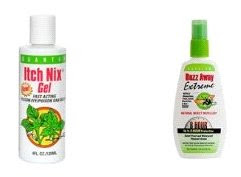
Buzz Away Extreme-Natural Insect Repellent

  • Main Ingredients: Soybean Oil, Geranium Oil, Castor Oil, Cedarwood Oil, Citronella Oil, Peppermint Oil, Lemongrass Oil
  • Skin Deep Rating: 0-1

California Baby Bug Repellent Spray

  • Ingredients: Purified water, proprietary essential oil blend, aloe vera, yucca, irish moss, arnica, calendula, nettle, gotu kola, cactus, candelilia wax, proprietary broad spectrum preservative system.
  • Skin Deep Rating: 2

Bubble and bee- Organic-Insect-Repellent

  • 100% Organic ingredients
  • Ingredients: Organic Soybean Oil, Organic Eucalyptus Essential Oil, Organic Lemongrass Essential Oil
    Skin Deep Rating: 0

Badger Anti-Bug Push-Up - 1.5 oz - Stick

  • Active Ingredients: *Citronella Oil (5.0%), Cedar Oil (2.0%), *Lemongrass Oil (2.0%), *Rosemary Oil (1.0%), & *Geranium Oil (1.0%).
  • Other Ingredients: *Extra Virgin Olive Oil, *Golden Yellow Beeswax, and *Castor Bean Oil.
  • * = Certified Organic
  • Skin Deep Rating: 0